
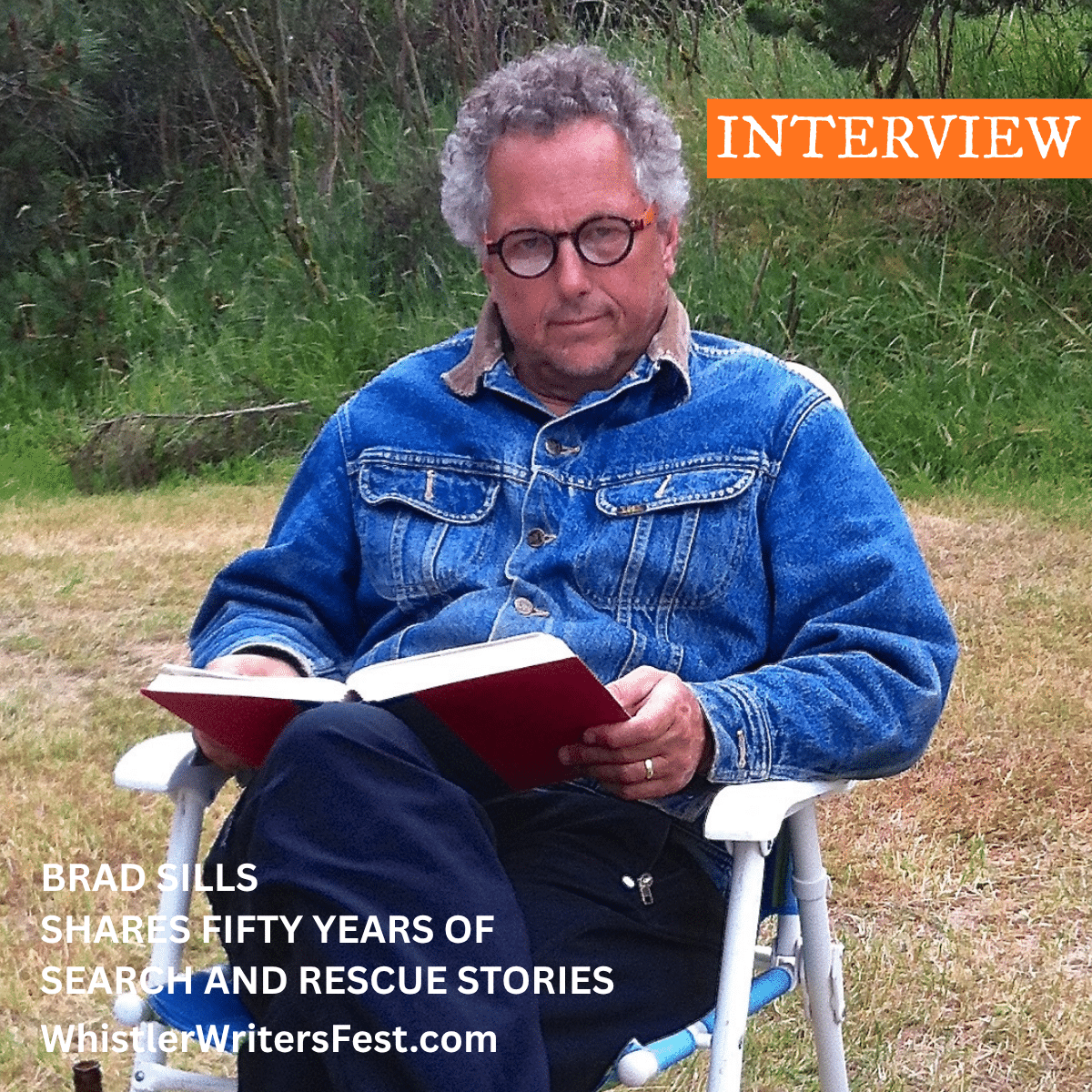
BRAD SILLS joined Whistler Search and Rescue Society in 1976 and has proudly served as a team member and on the executive board of the organization for fifty years. He first received certification as a SAR manager in 1992. Since that time, he has demonstrated leadership on numerous large-scale searches and technical rescues, which led to his certification in 2017 as one of only twelve Level 2 SAR managers in British Columbia. He was awarded the Whistler Citizen of the Year Award in 2012 and the provincial SAR Volunteer of the Year Award in 2017. He was the author of the BCSARA Helicopter Operations Training Program and the past chairperson of the BCSARA Air Support Committee. He is currently a director of the Air Rescue Association of Canada. Echoes on the Wind: Fifty Years of Search and Rescue in British Columbia’s Coast Mountains (Harbour) is his first book.
Whistler Writers Fest: For readers who aren’t familiar with your work, how would you describe it in two to three sentences?
Brad Sills: The most important thing I was given wasn’t literary at all, at least not at first — it came from a man named Dave Cathers, a founding member of Whistler Search and Rescue and my mentor.
Dave taught me, without ever making a lesson of it, that the reward in this work is quiet — no ego, no recognition, just the fact that you helped ease someone’s burden. He passed away in 2012 after a long battle with multiple myeloma, and I still feel his presence every time I walk into the rescue room.
What Dave really gave me was the thing that eventually became this book: the understanding that this work has a deeper meaning worth trying to put into words. I didn’t set out to be a writer. I set out to serve, the way he did. The writing came later, as a way of trying to explain what he’d shown me — and to make sure people like him don’t go unremembered.
Brad Sills appears in the Celebrating Sea to Sky Storytellers event. Tickets go on sale September 16.